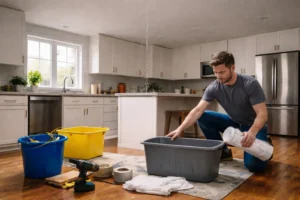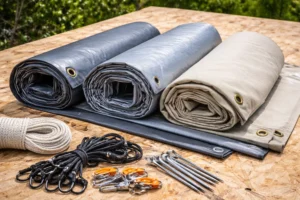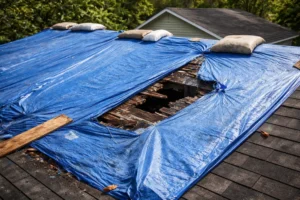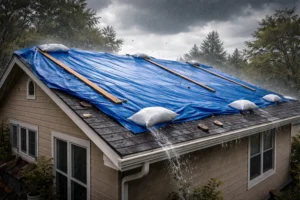
When a roof is damaged by storms, falling debris, wind, or water intrusion, a high-quality tarp becomes the first line of defense. A properly chosen roof tarp can prevent further interior damage, protect structural components, and buy valuable time before permanent repairs are completed. However, not all tarps perform the same, and choosing the wrong material can lead to premature failure, leaks, and costly secondary damage.
At RoofTarp.com, roof protection is not treated as an afterthought. The material used matters just as much as proper installation. This guide explores vinyl roof tarp vs polyethylene tarp durability, helping homeowners, contractors, and property managers understand which option delivers the best performance, longevity, and value in real-world roofing situations.
Why Roof Tarp Material Matters
A roof tarp is exposed to some of the harshest conditions imaginable. Direct sunlight, heavy rain, snow loads, fluctuating temperatures, and constant wind pressure all place stress on the material. While many tarps are advertised as waterproof, durability goes far beyond keeping water out.
The material determines:
- Tear and puncture resistance
- UV resistance and sun degradation
- Flexibility in heat and cold
- Resistance to wind uplift and abrasion
- How long the tarp can remain installed without failure
Temporary roof coverings are widely recognized as a critical damage-mitigation measure after storms. The U.S. Federal Emergency Management Agency (FEMA) notes that properly installed temporary roof protection helps reduce secondary water intrusion, mold growth, and interior damage while permanent repairs are pending. This highlights why choosing a durable tarp material is just as important as acting quickly after roof damage.
Two materials dominate roof tarping applications: polyethylene (poly) tarps and vinyl (PVC) tarps. Each serves a purpose, but their durability profiles differ significantly.
Understanding Polyethylene Roof Tarps
Polyethylene tarps are among the most widely used tarps on the market. They are constructed from woven polyethylene strands laminated with polyethylene sheets to create a waterproof barrier. Poly tarps are commonly recognized by their lightweight feel and affordability.
Key Characteristics of Poly Tarps
Poly tarps are popular for emergency roof coverage because they are:
- Lightweight and easy to handle
- Fully waterproof
- Available in many thickness levels
- Cost-effective for short-term use
They are frequently used for temporary roof protection after storms, for covering exposed sections during minor repairs, or as a stopgap solution when repairs are scheduled quickly.
Polyethylene Tarp Durability in Roofing Applications
While poly tarps provide immediate protection, durability is limited when exposed to prolonged outdoor conditions.
Tear and Puncture Resistance
Poly tarps rely on woven strands for strength. Thicker versions perform reasonably well, but they are still susceptible to tearing when subjected to strong winds, sharp debris, or repeated tension at anchor points. Once a tear begins, it can spread quickly.
UV Exposure
Most poly tarps include UV treatment, but continuous sun exposure gradually breaks down the material. Over time, poly tarps lose flexibility, become brittle, and are more likely to crack or split under stress.
Cold Weather Performance
In colder climates, polyethylene becomes stiffer. This rigidity increases the chance of cracking during installation or high winds, especially when temperatures drop below freezing.
Expected Lifespan
For roof applications with continuous outdoor exposure, poly tarps typically last one to three years depending on weather conditions, installation quality, and tarp thickness. Many are intended for short-term use measured in weeks or months rather than years.
Understanding Vinyl (PVC) Roof Tarps
Vinyl tarps are built for heavy-duty applications. They consist of a woven polyester base coated with polyvinyl chloride (PVC) on both sides. This construction creates a thick, flexible, and extremely durable tarp capable of handling extreme environments.
Polyvinyl chloride is widely used across construction and industrial sectors due to its strength, weather resistance, and long service life. A general overview of PVC’s properties explains why it performs well in outdoor and structural applications, including resistance to moisture, UV exposure, and temperature changes.
Vinyl tarps are commonly used in commercial roofing, industrial sites, long-term weather protection, and disaster recovery situations where failure is not an option.
Vinyl Tarp Durability Advantages
Vinyl tarps are widely regarded as the most durable tarp option for roof protection.
Superior Tear and Puncture Resistance
The polyester core and PVC coating allow vinyl tarps to withstand significantly higher tension without tearing. They resist punctures from debris and are less likely to fail at grommets or attachment points under high wind loads.
Exceptional UV Resistance
Vinyl tarps are designed for long-term sun exposure. The material resists UV degradation far better than polyethylene, maintaining flexibility and strength even after years outdoors.
Weather and Moisture Resistance
Vinyl is naturally waterproof and does not absorb moisture. It performs exceptionally well during prolonged rain events, heavy snowfall, and freeze-thaw cycles without losing integrity.
Temperature Stability
Unlike poly tarps, vinyl remains flexible in both extreme heat and cold. This flexibility reduces cracking, tearing, and stress damage caused by temperature swings.
Abrasion Resistance
Vinyl tarps tolerate friction better than polyethylene. When installed over shingles, roof decking, or uneven surfaces, vinyl resists wear that can quickly compromise thinner materials.
Vinyl vs Polyethylene: Durability Comparison
Strength and Structural Integrity
Vinyl tarps significantly outperform poly tarps in tensile strength, tear resistance, and puncture resistance. This makes vinyl the better choice for roofs exposed to high winds, debris impact, or long-term tension.
Sun and Weather Exposure
Poly tarps degrade more quickly under constant sunlight. Vinyl tarps are designed for prolonged UV exposure and retain performance far longer.
Cold and Heat Performance
Vinyl remains flexible across a wide temperature range. Poly tarps become brittle in cold weather and softer in extreme heat, increasing failure risk.
Longevity
Poly tarps are short-term solutions. Vinyl tarps are long-term protective systems capable of remaining installed for years when necessary.
Cost vs Value: Looking Beyond Price
Upfront Cost
Polyethylene tarps are less expensive initially, making them appealing for emergency or temporary situations.
Vinyl tarps cost more upfront due to heavier materials and advanced coatings.
Long-Term Value
When evaluated over time, vinyl tarps often provide better value. Replacing multiple failed poly tarps over several years can exceed the cost of a single vinyl tarp that remains intact throughout the repair period.
Risk Reduction
Roof tarp failure can lead to interior water damage, mold growth, insulation loss, and structural decay. In high-risk environments, investing in a more durable vinyl tarp reduces the chance of costly secondary damage.
Choosing the Right Roof Tarp for Your Situation
When a Poly Tarp Makes Sense
- Short-term emergency coverage
- Repairs scheduled within weeks
- Mild weather conditions
- Budget-limited scenarios
Poly tarps work well when exposure time is minimal and weather conditions are manageable.
When a Vinyl Tarp Is the Better Choice
- Long-term roof protection
- Delayed repairs due to insurance or contractor availability
- Harsh weather environments
- Commercial or high-value properties
Vinyl tarps are ideal when durability, reliability, and long-term performance are critical.
Installation Factors That Affect Durability
Material choice is only part of the equation. Proper installation dramatically affects tarp lifespan.
Secure Anchoring
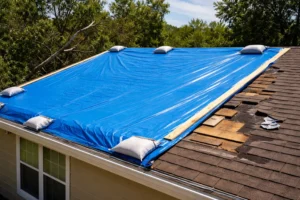
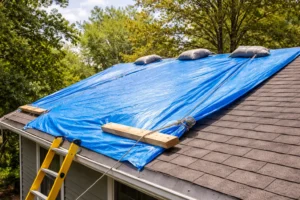
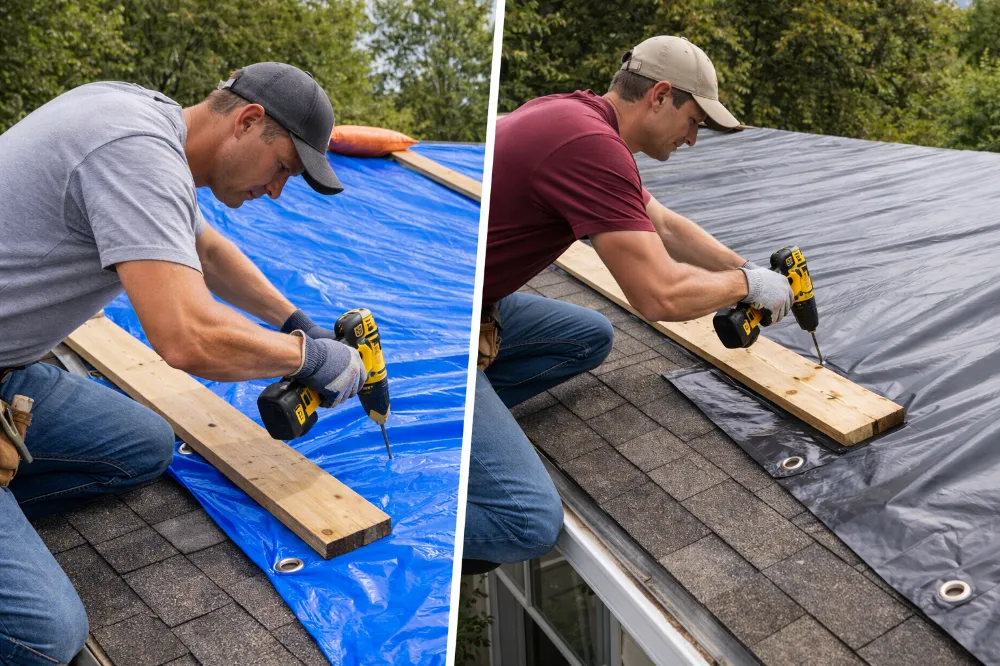
Tarps must be tightly secured using reinforced grommets, straps, or battens to prevent wind uplift.
Adequate Coverage
The tarp should extend several feet beyond the damaged area to ensure proper water runoff and prevent seepage.
Minimize Flapping
Loose edges lead to constant movement, which accelerates wear and tearing.
Regular Inspections
Periodic checks allow early detection of stress points, loose fasteners, or surface damage.
Final Thoughts: Vinyl vs Polyethylene Roof Tarp Durability
When comparing vinyl roof tarp vs polyethylene tarp durability, the difference is clear. Polyethylene tarps provide affordable, short-term protection and are suitable for temporary emergency use. Vinyl tarps offer superior durability, weather resistance, and long-term value, making them the preferred solution for extended roof protection and demanding conditions.
Choosing the right tarp is not just about covering a roof it’s about protecting everything underneath it. Selecting the appropriate material can prevent costly damage, reduce maintenance, and provide peace of mind while permanent repairs are underway.
FAQs
What is the main difference between vinyl and polyethylene roof tarps?
Vinyl tarps are heavier, more durable, and longer-lasting, while polyethylene tarps are lighter, cheaper, and designed for short-term use.
Which roof tarp lasts longer outdoors?
Vinyl roof tarps typically last several years outdoors, while polyethylene tarps usually last one to three years under continuous exposure.
Are vinyl roof tarps waterproof?
Yes, vinyl roof tarps are fully waterproof and maintain performance even during prolonged rain or snow.
Are polyethylene tarps suitable for emergency roof repairs?
Yes, polyethylene tarps are commonly used for short-term emergency roof protection when repairs are scheduled quickly.
Which tarp performs better in high winds?
Vinyl tarps perform better in high winds due to superior tear resistance, weight, and structural strength.
Do vinyl roof tarps resist UV damage better than poly tarps?
Yes, vinyl tarps have stronger UV resistance and degrade much slower under direct sunlight than polyethylene tarps.
Are vinyl tarps worth the higher cost?
For long-term or harsh weather protection, vinyl tarps often provide better value by reducing replacements and failure risk.
Can polyethylene tarps crack in cold weather?
Yes, polyethylene tarps can become brittle and crack in freezing temperatures, especially after prolonged exposure.
Which tarp is better for long-term roof protection?
Vinyl tarps are the better option for long-term roof protection due to durability, flexibility, and weather resistance.
How do I extend the lifespan of a roof tarp?
Secure the tarp tightly, minimize flapping, ensure proper overlap, and inspect it regularly for wear or damage.