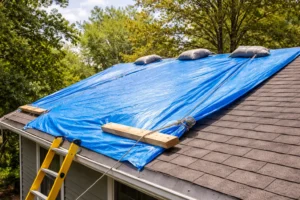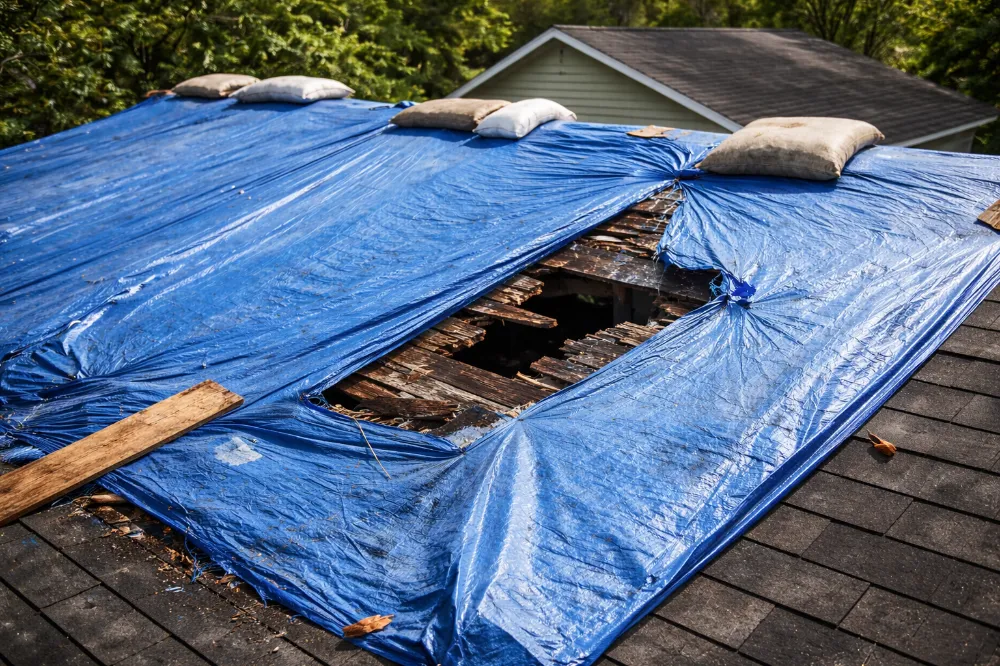
A roof tarp plays a critical role in protecting a home after roof damage caused by storms, fallen debris, or sudden structural failure. When installed correctly, it acts as a temporary barrier that prevents water from entering the attic and interior spaces while permanent repairs are being scheduled. However, a roof tarp is not designed to last indefinitely. Over time, exposure to weather, sunlight, and physical stress gradually reduces its effectiveness.
Knowing when a roof tarp needs replacement is essential for preventing secondary damage. Many homeowners assume that if a tarp is still attached, it is still doing its job. In reality, a tarp can appear intact while allowing moisture to seep underneath, leading to insulation damage, mold growth, and structural deterioration. This guide explains the most reliable signs that a roof tarp needs replacement, why those signs matter, and what steps to take to protect your home.
Understanding the Role of a Roof Tarp
A roof tarp is a temporary protective covering installed over damaged roofing areas. Its primary purpose is to redirect water away from compromised sections of the roof until permanent repairs or replacement can be completed. Roof tarps are commonly used after severe weather events such as hurricanes, hailstorms, windstorms, or fallen trees.
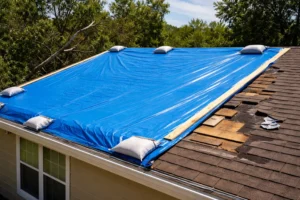
When installed properly, a roof tarp should remain tightly secured, lie flat against the roof surface, and extend beyond the damaged area to ensure proper water runoff. It should shed rain efficiently without allowing pooling, leaks, or wind uplift. While modern tarps are manufactured from durable materials, they are still exposed to extreme environmental conditions that gradually weaken their structure.
Why Roof Tarps Are Not a Permanent Solution
Roof tarps are engineered for temporary use, not long-term exposure. One of the most damaging factors is prolonged sunlight. Ultraviolet radiation breaks down plastics and synthetic fibers over time, reducing flexibility and tensile strength even when no visible damage is present. According to Wikipedia’s overview of ultraviolet radiation, extended UV exposure accelerates material degradation in outdoor coverings, which is why tarps can fail suddenly after appearing stable for weeks:
In addition to UV exposure, moisture penetration, temperature fluctuations, and repeated wind stress further weaken tarp materials and fasteners. As these forces compound, the tarp loses its ability to remain sealed and shed water effectively, making replacement inevitable rather than optional.
How Long a Roof Tarp Is Designed to Last
The lifespan of a roof tarp depends on several factors, including material quality, installation method, weather exposure, and roof slope. In general, most roof tarps are expected to last anywhere from a few weeks to a few months.
In mild weather with limited sun exposure and minimal wind, a properly installed tarp may perform well for several months. In areas with strong sunlight, frequent rain, high winds, or repeated storms, the effective lifespan may be much shorter. Regardless of conditions, a tarp should be inspected regularly, as failure often occurs suddenly rather than gradually.
Early Warning Signs Your Roof Tarp Is Failing
Visible Tears, Holes, or Material Damage
One of the most obvious signs that a roof tarp needs replacement is visible damage to the material itself. Tears, punctures, and rips compromise the tarp’s ability to keep water out. Even small holes can allow moisture to penetrate, especially during heavy rainfall or wind-driven storms.
Damage often occurs from flying debris, sharp roof edges, fallen branches, or constant movement caused by wind. Over time, minor tears tend to expand, particularly when water weight or wind pressure is added. Once the tarp material is compromised, replacement is the safest option.
Loose, Missing, or Compromised Fasteners
A roof tarp relies heavily on secure fasteners to remain effective. Nails, screws, straps, or battens that loosen or detach reduce the tarp’s ability to stay sealed against the roof surface. Loose fasteners often lead to lifting edges, which allow water to be pushed underneath the tarp rather than flowing over it.
Fasteners can fail due to wood rot beneath the attachment points, repeated wind stress, corrosion, or improper installation. When fasteners begin to fail across multiple areas, replacing the tarp is often more reliable than attempting repeated repairs.
Sagging Areas and Water Pooling on the Tarp Surface
A properly installed roof tarp should allow water to flow smoothly off the roof without collecting in low spots. Sagging sections or visible water pooling indicate that the tarp is no longer under proper tension or that the material has stretched.
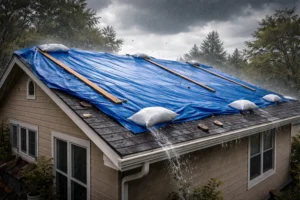
Pooling water places significant strain on the tarp and its fasteners. The added weight increases the risk of tearing and can cause water to spill underneath the tarp edges. Repeated ponding is a strong indication that the tarp has lost structural integrity and should be replaced.
Wrinkling, Creasing, or Uneven Tension
Wrinkles and creases across a roof tarp are signs that it is no longer sitting flat against the roof surface. Uneven tension often results from shifting fasteners, wind movement, or material fatigue. These irregularities disrupt water runoff and create channels where moisture can collect or infiltrate.
Over time, wrinkling accelerates wear by concentrating stress along folds and creases. If re-tensioning does not resolve the issue, replacement is typically necessary.
Discoloration, Brittleness, and UV Degradation
Extended exposure to sunlight causes gradual degradation of tarp materials. Fading color, chalky residue, or a brittle texture indicate that the tarp’s protective layers are breaking down. While the tarp may still appear intact, its resistance to tearing and water penetration is significantly reduced.
This type of degradation often precedes sudden failure during storms or temperature changes, making early replacement critical.
Frayed Edges and Failing Seams
The edges and seams of a roof tarp experience the highest levels of stress. Fraying edges, unraveling threads, or separating seams compromise the tarp’s ability to remain watertight. Once seams begin to fail, water can enter beneath the tarp even if the main surface remains undamaged.
Performance Failures That Signal Immediate Replacement
Water Leaks or Moisture Inside the Home
Interior moisture is one of the most serious indicators that a roof tarp has failed. Water stains on ceilings, damp insulation, musty odors, or visible dripping during rainfall suggest that water is bypassing the tarp entirely.
The U.S. Environmental Protection Agency (EPA) notes that mold can begin growing within 24 to 48 hours of moisture exposure, especially in enclosed spaces like attics and wall cavities. Persistent leaks caused by a failing tarp create ideal conditions for mold growth and material deterioration, increasing health risks and repair costs.
Wind Uplift, Flapping, or Shifting During Storms
If a tarp flaps loudly in the wind or visibly lifts during storms, it is no longer providing reliable protection. Wind uplift allows rain to be driven underneath the tarp, even during moderate rainfall.
Persistent movement also accelerates wear by stressing fasteners and seams. A tarp that shifts repeatedly in windy conditions should be replaced to restore secure coverage.
Sealant, Tape, or Flashing Failure Around Edges
Many tarp installations rely on sealants, waterproof tape, or flashing to prevent water from entering around edges and penetrations. Over time, these materials can peel, crack, or lose adhesion.
Once edge seals fail, water can infiltrate beneath the tarp even if the main surface remains intact. Widespread sealant failure typically warrants full replacement rather than spot repairs.
Changes After Severe Weather Events
Severe weather often exposes weaknesses in roof tarps. After storms, tarps may develop new wrinkles, loosened fasteners, or shifted alignment. These changes reduce effectiveness and increase leak risk.
If a tarp shows noticeable deformation after a storm and cannot be restored through minor adjustments, replacement is the safest option.
Risks of Leaving a Damaged Roof Tarp in Place
When a damaged tarp remains in place, water intrusion often worsens with each weather event. Interior finishes, insulation, and structural components that were previously dry may begin to absorb moisture, leading to long-term damage.
Moisture trapped within building materials creates ideal conditions for mold and mildew growth, as outlined by the EPA. Once insulation and framing are affected, remediation becomes far more expensive than replacing a tarp early.
Electrical systems are also vulnerable. Water exposure can lead to corrosion, short circuits, and safety hazards that extend beyond cosmetic damage.
Inspecting Your Roof Tarp Safely and Effectively
Roof tarp inspections should be conducted carefully, preferably from the ground or with binoculars. If roof access is necessary, proper fall protection should always be used. Look for visible damage, water pooling, lifting edges, and changes in alignment.
Inspections should be performed after major weather events and periodically throughout the tarp’s lifespan to identify problems early.
Common Roof Tarp Maintenance Mistakes to Avoid
Many homeowners attempt to extend tarp life by patching holes, adding temporary fasteners, or ignoring minor damage. While these actions may offer short-term relief, they often provide a false sense of security.
Walking directly on tarps, allowing debris buildup, or delaying inspections increases the likelihood of sudden failure. Maintenance can help temporarily, but it should never replace timely replacement when warning signs appear.
When Replacement Is the Only Safe Option
Replacement is the only responsible choice when a tarp shows multiple signs of failure, allows water intrusion, or no longer remains securely attached. Continuing to rely on a compromised tarp increases the risk of severe damage and safety hazards.
Choosing the Right Replacement Roof Tarp
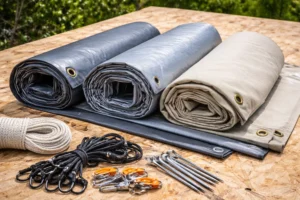
Selecting a high-quality replacement tarp is essential. Durable, UV-resistant materials offer better protection during extended repair timelines. Proper sizing ensures adequate overlap beyond damaged areas, and secure installation methods help prevent wind uplift and water infiltration.
Professional Roof Tarp Installation vs DIY Coverage
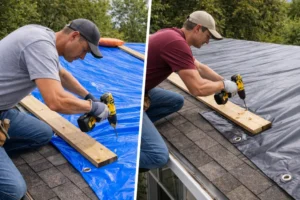
While some homeowners choose DIY tarp installation, improper sealing and fastening often reduce effectiveness. Professional installation provides better tensioning, secure attachment, and improved water shedding, reducing the risk of interior damage while permanent repairs are arranged.
Steps to Take Before Replacing a Roof Tarp
Before replacement, document the tarp condition with photos, note any interior damage, and record dates of storms or leaks. This documentation can support insurance claims and repair planning.
Final Checklist: Signs a Roof Tarp Needs Replacement
A roof tarp should be replaced if you notice:
- Tears, holes, or material damage
- Loose or missing fasteners
- Sagging or water pooling
- Wrinkling or uneven tension
- Discoloration or brittleness
- Frayed edges or failing seams
- Interior leaks or moisture
- Wind uplift or flapping
- Sealant or edge failure
Protecting Your Home Until Permanent Repairs Are Made
A roof tarp is a critical temporary safeguard, but only when it functions as intended. Recognizing the signs that a roof tarp needs replacement allows homeowners to act before minor issues become major problems. Prompt replacement helps protect the structure, interior, and long-term value of your home.
For dependable roof tarp solutions, replacement guidance, and professional installation support, RoofTarp.com provides reliable protection when your roof needs it most.
FAQs
How do I know if my roof tarp needs to be replaced?
If you notice tears, loose fasteners, water pooling, interior leaks, or wind lifting the tarp, replacement is recommended.
How long should a roof tarp last?
Most roof tarps last a few weeks to a few months, depending on weather exposure, material quality, and installation.
Can I repair a torn roof tarp instead of replacing it?
Minor damage can sometimes be patched temporarily, but multiple tears or seam failures usually require full replacement.
Is water pooling on a roof tarp normal?
No, pooling indicates improper tension or material stretching and increases the risk of leaks and tarp failure.
Can a roof tarp fail even if it looks intact?
Yes, UV damage and weakened seams can cause leaks even when the tarp appears undamaged.
Should I replace my roof tarp after a major storm?
Yes, severe weather can weaken fasteners and seams, making post-storm inspection and replacement important.
What happens if I don’t replace a damaged roof tarp?
Delaying replacement can lead to interior water damage, mold growth, insulation failure, and higher repair costs.
Is a roof tarp a permanent roofing solution?
No, roof tarps are temporary protections and should only be used until permanent repairs are completed.
Can wind damage a roof tarp even if it’s secured?
Yes, repeated wind stress can loosen fasteners, stretch material, and cause uplift over time
Is professional roof tarp installation better than DIY?
Professional installation typically provides better sealing, tensioning, and durability, reducing leak risk.