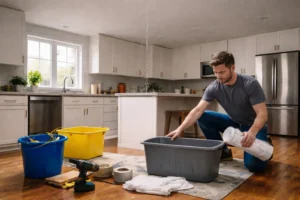
The Complete Guide for Homeowners Protection, Lifespan, Weather Durability & Best Practices When a roof is damaged whether from a hurricane, hailstorm, wind event, or days of relentless rain a roof tarp often becomes the first line of defense. It’s fast. It’s effective. And in many cases, it’s the only thing standing between your home and serious interior damage. But one question always comes up once the tarp is installed: how long can a roof tarp last in severe weather?
The honest answer is nuanced. A roof tarp can last anywhere from a few days to several months, depending on material quality, installation method, weather exposure, and maintenance. In rare cases, with premium materials and ideal conditions, it can last even longer. Professional-grade tarping systems are designed specifically to extend that window of protection as much as possible. This guide walks through what homeowners should realistically expect from a roof tarp in severe weather and how to get the most life out of it.
What a Roof Tarp Is (and What It Isn’t)
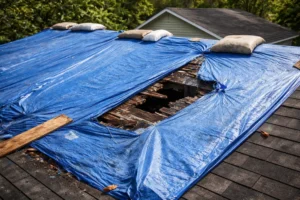
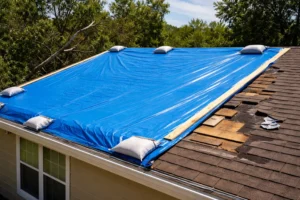
A roof tarp is a temporary protective covering placed over damaged roofing areas to prevent water intrusion and further deterioration. Its purpose is to stabilize the situation until permanent repairs can be made.
A roof tarp is designed to:
- Block rain, snow, and wind-driven moisture
- Protect insulation, drywall, flooring, and belongings
- Prevent structural rot and mold growth
- Buy time for inspections, insurance claims, and repairs
What it is not is a long-term roofing solution. Even the best tarp is still temporary by design. Roof tarping should always be viewed as a bridge between damage and repair, not a replacement for roofing work.
Typical Roof Tarp Lifespan in Severe Weather
In severe weather environments, a roof tarp’s lifespan varies widely. Real-world expectations are shaped by storm frequency, climate, and tarp quality. In most cases, a properly installed, heavy-duty roof tarp can last several weeks to three months under harsh conditions. With premium materials and careful maintenance, that lifespan can stretch to six months or longer.
In moderate climates with less UV exposure and fewer storms, some tarps remain functional for close to a year. However, extreme conditions such as hurricanes, repeated wind events, or heavy snow loads can shorten that window significantly. The key takeaway is this: a tarp lasts as long as its weakest point allows, whether that’s material breakdown, wind stress, or water pooling.
Why Tarp Material Makes a Major Difference
The type of tarp used plays a huge role in how long it survives severe weather.
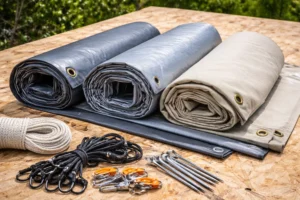
Polyethylene (Poly) Tarps
Poly tarps are the most commonly used option during emergencies because they’re affordable and widely available. They are waterproof and relatively easy to install, making them suitable for immediate protection.
However, poly tarps are vulnerable to UV degradation, which causes them to become brittle over time. Prolonged ultraviolet exposure weakens plastics and synthetic materials at a molecular level, a process well documented in material science research on ultraviolet degradation. Under intense sun exposure and high winds, poly tarps may only last weeks to a couple of months before tearing or cracking. They work best for short-term coverage when repairs are already scheduled.
Vinyl Tarps
Vinyl tarps are significantly more durable and are often used when longer protection is required. They resist UV damage, tearing, and punctures far better than standard poly tarps.
When installed correctly, vinyl tarps can withstand severe weather for many months and sometimes longer. Professional tarping crews often prefer vinyl options because of their strength, flexibility, and weather resistance. These tarps are ideal when delays in repair are expected due to insurance timelines, contractor availability, or widespread storm damage.
Canvas and Specialty Materials
Canvas tarps, when properly treated, offer durability and breathability. While not as commonly used for roof emergencies, high-quality waterproofed canvas can last several years in moderate outdoor conditions. Specialty tarps with UV inhibitors, reinforced seams, and industrial coatings can also extend tarp lifespan but at a higher cost.
How Severe Weather Shortens or Extends Tarp Life
Different weather elements stress tarps in different ways.
Sun and UV Exposure
Sunlight is one of the biggest enemies of roof tarps. Prolonged UV exposure weakens fibers, fades material, and leads to cracking. Tarps with built-in UV protection last significantly longer in sunny climates.
Wind and Storm Pressure
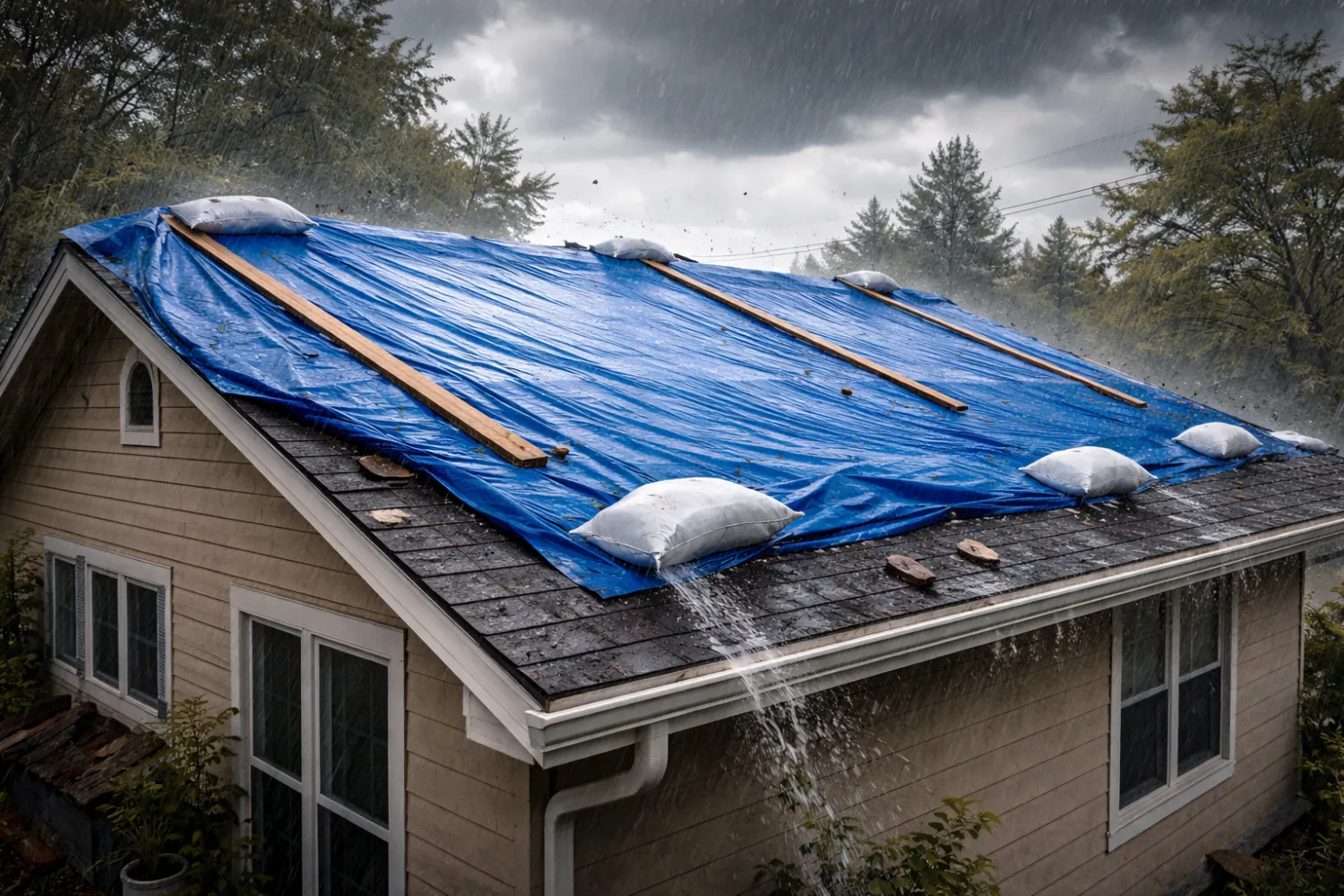
Wind places constant stress on tarp edges, seams, and fasteners. Poorly secured tarps can flap, tear, or lift entirely during storms.
High-wind regions demand reinforced installation methods, which is why professional tarping systems consistently outperform rushed DIY installations.
Rain, Snow, and Water Load
Standing water is another major threat. Water pooling adds weight and pulls at anchor points, increasing the chance of sagging or tearing.
According to guidance from the U.S. Environmental Protection Agency, prolonged moisture intrusion can contribute to mold growth and structural deterioration if not addressed promptly one of the primary risks of leaving temporary roof coverings in place too long.
Proper tarp installation always includes slope management to encourage runoff and prevent water accumulation.
Installation Quality Is the Biggest Lifespan Factor
Even the strongest tarp will fail quickly if installed incorrectly.
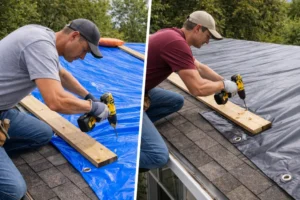
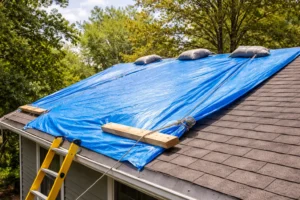
A well-installed roof tarp should:
- Extend several feet beyond the damaged area
- Be secured with boards or battens, not just nails
- Avoid puncturing compromised roofing sections
- Allow water to drain naturally
- Use reinforced grommets and strong fasteners
Installation technique often determines whether a tarp lasts weeks or months.
Maintenance That Keeps a Tarp Working Longer
Roof tarps need periodic checks, especially after storms.
Maintenance steps that extend tarp life include:
- Inspecting for tears or loose fasteners
- Clearing debris that could puncture material
- Adjusting areas where water begins to pool
- Re-securing edges after strong winds
A tarp that receives basic maintenance will almost always outperform one that’s ignored.
Clear Signs a Roof Tarp Needs Replacement
No tarp lasts forever. Replace it immediately if you notice:
- Visible tears or holes
- Water leaking beneath the tarp
- Cracking or brittleness from UV damage
- Loose or failing anchor points
- Persistent sagging or water pooling
In severe weather zones, proactive replacement is often safer than waiting for visible failure.
Risks of Leaving a Roof Tarp Installed Too Long
While a tarp may still appear intact, extended use carries hidden risks.
Moisture trapped beneath the tarp can cause mold growth, wood rot, and decking damage. UV-weakened tarps can fail suddenly during storms. Repeated wind exposure fatigues materials and fasteners over time. A tarp should always be treated as a temporary solution with a clear exit plan.
Realistic Expectations in Extreme Conditions
In areas prone to hurricanes, tornadoes, or frequent severe storms, expectations must be realistic.
Even high-quality tarps may only last weeks to a few months when exposed to constant wind, flying debris, and heavy rainfall. That doesn’t mean tarping failed it means it did its job under extreme stress.
Roof tarping is about damage control, not permanence.
Maximizing Roof Tarp Lifespan With the Right Approach
Professional-grade tarping systems focus on:
- Heavy-duty, weather-resistant materials
- Reinforced edges and anchoring methods
- Proper drainage and tension control
- Installation methods designed for wind resistance
These factors dramatically increase how long a tarp remains effective during severe weather.
Transitioning From Tarp to Permanent Repair
A roof tarp buys time but that time should be used wisely.
Once conditions allow:
- Schedule a professional roof inspection
- Document damage for insurance
- Obtain repair estimates
- Plan permanent repairs before tarp degradation
Replacing the roof or damaged sections as soon as possible prevents secondary damage and long-term costs.
Final Thoughts
So, how long can a roof tarp last in severe weather?
With the right materials, expert installation, and basic maintenance, a roof tarp can protect a home for weeks or months, even under harsh conditions. Premium tarping systems push that lifespan further by addressing the most common failure points. But no tarp is permanent. Its job is to protect, stabilize, and buy time nothing more, nothing less. Used correctly, a roof tarp is one of the most valuable emergency tools a homeowner can have after severe weather.
FAQs
How long can a roof tarp last in severe weather?
A roof tarp can last anywhere from a few weeks to several months, depending on material quality, installation, weather exposure, and maintenance.
Can a roof tarp withstand heavy rain and storms?
Yes, a properly installed heavy-duty tarp can withstand heavy rain and storms, but pooling water and high winds can shorten its lifespan.
Will a roof tarp survive hurricane-force winds?
Roof tarps can provide short-term protection during hurricanes, but extreme winds may damage or dislodge them, even with professional installation.
What type of tarp lasts the longest on a roof?
Vinyl tarps generally last longer than standard poly tarps because they resist UV damage, tearing, and prolonged weather exposure.
Does sunlight reduce the lifespan of a roof tarp?
Yes, prolonged UV exposure weakens tarp materials over time, causing brittleness, cracking, and reduced strength.
How often should a roof tarp be inspected?
Roof tarps should be inspected after major storms and periodically every few weeks to check for tears, loose fasteners, or water pooling.
Is it safe to leave a roof tarp on for several months?
It can be safe temporarily, but long-term use increases the risk of trapped moisture, mold growth, and hidden structural damage.
Can I install a roof tarp myself?
DIY installation is possible, but improper anchoring or drainage can significantly reduce effectiveness and lifespan compared to professional installation.
What are signs that a roof tarp needs replacement?
Visible tears, sagging, cracking, water leaks, or loose attachment points indicate the tarp should be replaced immediately.
Is a roof tarp a permanent roofing solution?
No, a roof tarp is strictly a temporary measure designed to protect the home until permanent repairs can be completed.