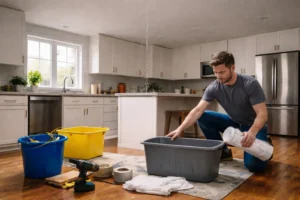
A roof leak has a way of turning a normal day into a stressful one—fast. Water dripping through the ceiling. Buckets on the floor. Weather forecasts you suddenly care deeply about. If you’re dealing with storm damage, missing shingles, or an unexpected leak, learning how to tarp a roof without nails can buy you valuable time without causing further damage.
And yes, it can be done safely and effectively.
I’ve helped homeowners handle temporary roof protection while waiting on insurance approvals, contractors, or materials. The key is understanding water flow, wind behavior, and how to secure a tarp without puncturing your roof. This guide walks you through exactly how to tarp a roof without nails—step by step—using methods that actually hold.
Let’s get into it.
Why You Might Need to Tarp a Roof Without Nails
Sometimes nails are simply not an option.
You may be renting.
You may be dealing with insurance rules.
You may want to avoid creating additional holes that turn a temporary problem into a permanent one.
Learning how to tarp a roof without nails is especially useful when:
- You’re waiting on a professional repair
- The damage is temporary but urgent
- You need a non-invasive solution
- You’re dealing with HOA or landlord restrictions
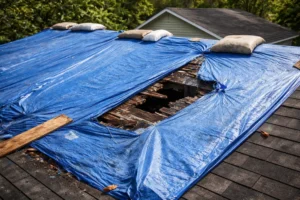
A properly installed tarp can redirect water, protect insulation, and prevent interior damage. But only if it’s done right.
Safety Comes First—No Exceptions
Before you even think about climbing a ladder, pause.
Roof work is dangerous. Period.
If the roof is steep, wet, icy, or unstable, do not attempt this yourself. If you feel unsure at any point, stop. Calling a professional is always cheaper than a hospital visit.
Basic safety rules:
- Work in dry, calm weather only
- Use a stable ladder on level ground
- Wear non-slip shoes and gloves
- Have a second person nearby
- Never step on damaged decking
This guide assumes temporary mitigation, not a full repair.
Tools and Materials You’ll Need (No Nails Required)
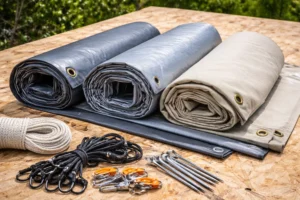
You don’t need fancy equipment. You do need the right materials.
Essential items:
- Heavy-duty tarp (poly or vinyl, oversized)
- Rope or paracord
- 2×4 boards (optional but recommended)
- Sandbags, water jugs, or weighted objects
- Ladder and safety gear
Tarp sizing tip:
Always go bigger than the damaged area. Water travels sideways under shingles. Coverage matters.
Find the Real Leak—Not Just the Drip
This step gets skipped. And it causes failures.
Water rarely enters directly above where you see it inside. It follows decking, trusses, and gravity before showing up indoors.
Before tarping:
- Trace the leak uphill
- Look for missing shingles, flashing gaps, or punctures
- Clear debris carefully
- Measure an area that extends above and around the damage
This is critical when learning how to tarp a roof without nails correctly.
Method 1: The 2×4 Roll Method (Most Secure)
This is the most reliable nail-free approach. I use it whenever possible.
How it works
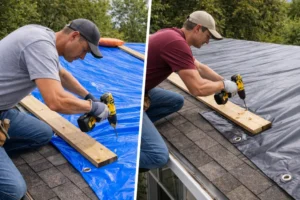
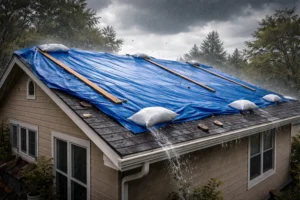
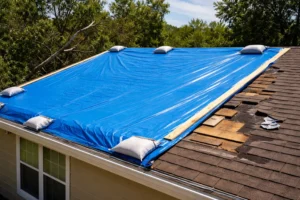
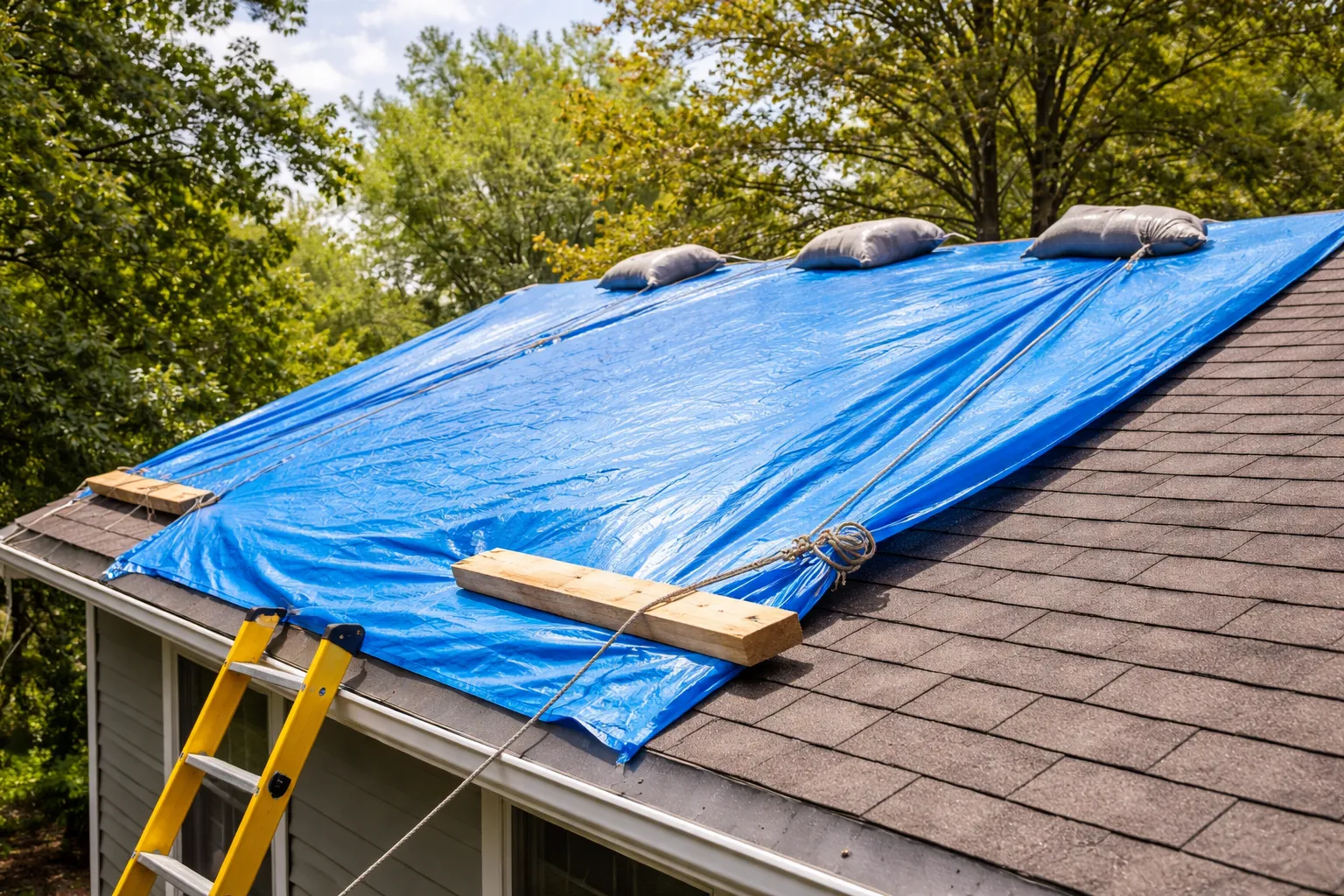
Instead of nailing the tarp, you roll its edges around 2×4 boards to create weighted clamps. The boards anchor the tarp using gravity and tension—not punctures.
Step-by-step:
- Lay the tarp over the damaged area, extending past the ridge if possible
- Roll the top edge of the tarp tightly around a 2×4
- Place the rolled edge above the damaged section
- Repeat for side edges if needed
- Secure the boards with rope tied to solid anchor points or weighted objects
Why it works:
- No roof penetration
- Even tension distribution
- Strong wind resistance
This is the gold standard for how to tarp a roof without nails.
Method 2: Rope and Anchor Method (Sloped Roofs)
When boards aren’t practical, rope can do the job.
The key is choosing anchor points that won’t move.
Good anchor options:
- Chimney base (never the cap)
- Structural framing
- Heavy ground anchors on the opposite side of the roof
How to do it:
- Drape the tarp smoothly over the damage
- Tie rope through reinforced grommets
- Run rope over the roof and down to anchors
- Tension evenly—not overly tight
Use simple, reliable knots. No fancy tricks required.
This method works best when learning how to tarp a roof without nails on steep or complex rooflines.
Method 3: Weighted Tarping (Flat or Low-Slope Roofs)
Flat roofs change the game.
Here, weight matters more than tension.
Suitable weights:
- Sandbags
- Water-filled jugs
- Rubber roofing weights
Placement tips:
- Distribute weight evenly
- Focus on edges, not the center
- Avoid sharp objects
This method should never be used on steep slopes. Gravity wins every time.
Directing Water the Right Way
A tarp that holds but traps water still fails.
Water must flow off the roof.
Key principles:
- Always overlap downhill
- Avoid folds or pockets
- Smooth the tarp flat
- Extend coverage past the leak
Think like rain. If water can sit, it will.
How to Reinforce Without Puncturing
You’ll be tempted to add tape or extra fasteners. Be careful.
Safe reinforcement options:
- Duct tape on tarp-to-tarp seams only
- Extra rope for tension adjustment
- Additional weights along edges
Never puncture the tarp or roofing material. That defeats the entire purpose of learning how to tarp a roof without nails.
Common Mistakes That Cause Failure
I’ve seen these over and over.
Avoid these errors:
- Using a tarp that’s too small
- Anchoring to weak objects
- Pulling the tarp too tight
- Ignoring wind direction
- Forgetting to check after storms
A tarp is not “set it and forget it.” It needs monitoring.
How Long Will a Nail-Free Tarp Last?
This is temporary protection—not a fix.
Typical lifespan:
- Calm weather: 30–90 days
- Windy or stormy areas: days to weeks
Inspect after every storm. Reposition as needed.
If you’re asking how long you can rely on how to tarp a roof without nails, the answer is simple: only until repairs are made.
When You Should Call a Professional
Some situations are not DIY-friendly.
Call a pro if:
- The roof feels unstable
- Damage exceeds a small area
- You see sagging or soft decking
- Insurance documentation is required
Temporary tarping is a stopgap. Permanent repairs still matter.
Final Thoughts: Smart Protection, Not Shortcuts
Knowing how to tarp a roof without nails is one of those skills you hope you never need—but are glad to have when you do.
It protects your home.
It limits interior damage.
It buys you time.
Done right, a nail-free tarp can handle wind, rain, and unexpected weather without causing further harm. Respect the roof. Respect the process. And treat the tarp as the temporary solution it is.
FAQs
Can you really tarp a roof without nails?
Yes, using boards, rope, or weights allows you to secure a tarp without puncturing the roof.
What is the best method for tarping a roof without nails?
The 2×4 board roll method offers the strongest hold and works well in wind and rain.
How big should the tarp be?
The tarp should extend several feet beyond the damaged area, especially uphill, to account for water travel.
Is it safe to tarp a roof by yourself?
It’s safer with a helper, especially when handling large tarps or working on sloped roofs.
How long will a nail-free roof tarp last?
In mild weather, a properly secured tarp can last several weeks to a few months.
Can I use duct tape to secure the tarp?
Tape can reinforce tarp seams, but it should never replace proper tension or weighting.
Will a tarp stop all roof leaks?
A tarp can redirect water temporarily, but it is not a permanent fix for roof damage.
Can this method be used on steep roofs?
Yes, but rope and board methods work better than weighted tarps on steep slopes.
What happens if the tarp flaps in the wind?
Flapping indicates poor tension and can cause failure, so adjust and secure edges immediately.
When should I call a professional instead?
If the roof is unstable, steep, or heavily damaged, professional help is the safer option.