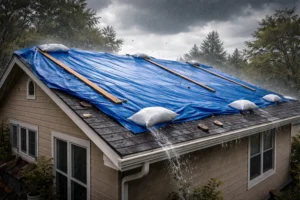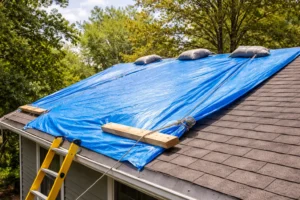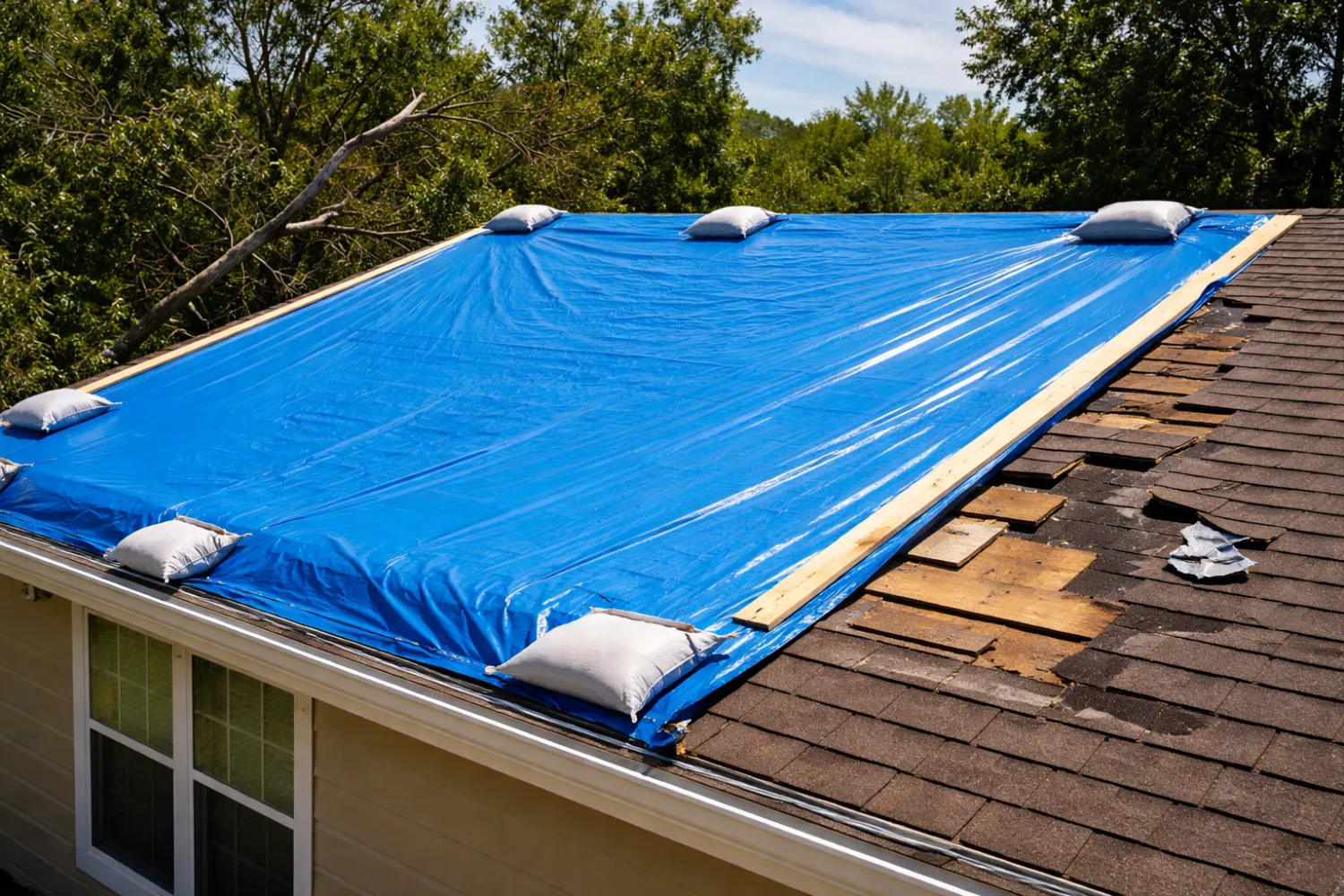
When roof damage strikes whether from hurricanes, hail, windstorms, fallen trees, or years of wear protecting your home quickly becomes the top priority. A long-term roof tarp is often the first and most critical line of defense, stopping water intrusion and preventing further structural damage until permanent repairs can be completed.
For many homeowners, the biggest concern is how long can a roof tarp last in severe weather, especially when repair timelines are uncertain. In real-world situations, roof tarps are relied on for weeks or even months while navigating insurance approvals, contractor backlogs, or material shortages. Understanding how long-term roof tarps work, how long they last, and how to use them properly can save thousands of dollars in secondary damage.
This guide covers everything you need to know about long-term roof tarps from materials and installation to maintenance, safety, and insurance considerations so you can protect your property with confidence.
What Is a Long-Term Roof Tarp?
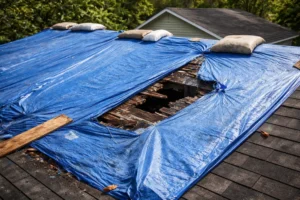
A roof tarp is a heavy-duty waterproof covering installed over damaged sections of a roof to temporarily prevent water, debris, and wind from entering the structure. While roof tarps are inherently temporary, long-term roof tarps are designed to last significantly longer than standard emergency tarps when installed correctly.
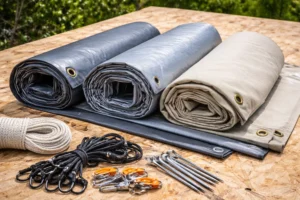
Unlike lightweight tarps meant for short-term use, long-term roof tarps are typically made from reinforced polyethylene or industrial-grade vinyl. These materials fall under the broader category of tarpaulins, which are flexible, water-resistant sheets commonly used in construction and disaster mitigation.
Choosing the best tarp material for extended roof protection plays a major role in how long the tarp performs and how well it resists tearing, UV exposure, and wind uplift. The purpose of a long-term roof tarp is not to replace your roof but to buy you time while keeping your home protected.
Why Long-Term Roof Tarps Are Necessary
Many homeowners assume roof tarps are only needed for a few days. In reality, long-term tarping is often required due to delays such as:
- Insurance claim investigations and approvals
- Contractor shortages after major storms
- Material backorders
- Permit or HOA requirements
In these situations, homeowners need temporary roof protection while waiting for insurance approval, especially to prevent interior water damage from worsening the claim. According to U.S. emergency management guidance, property owners are expected to take reasonable steps to reduce further damage after a disaster.
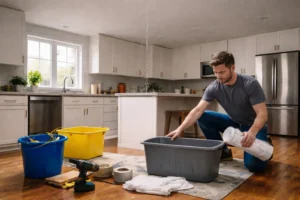
Without a tarp, even light rainfall can lead to soaked insulation, stained ceilings, warped framing, and mold growth.
How Long Can a Roof Tarp Last?
The lifespan of a roof tarp depends on three main factors: material quality, installation method, and environmental exposure.
Typical Roof Tarp Longevity
- Light-duty tarps: 7–14 days
- Heavy-duty poly tarps: 30–90 days
- Industrial vinyl tarps: 3–6 months or longer with maintenance
Homeowners often ask about vinyl roof tarp vs polyethylene tarp durability, and the difference is significant. Vinyl tarps are thicker, more UV-resistant, and better suited for long-term exposure, while polyethylene tarps are more affordable but degrade faster under sunlight and heat.
Best Materials for Long-Term Roof Tarping
Selecting the right tarp material is essential for extended coverage.
Polyethylene (Poly) Tarps
- Waterproof and lightweight
- Cost-effective
- Moderate UV resistance
- Best for short- to mid-term coverage
Vinyl Tarps
- Extremely durable and tear-resistant
- High UV and weather resistance
- Heavier and more expensive
- Ideal for long-term roof tarp applications
When long-term protection is needed, vinyl tarps consistently outperform standard poly tarps.
Thickness and Construction Matter
Tarp thickness is measured in mils, and it directly impacts durability.
- 10–12 mils: Minimum for extended use
- 16–20+ mils: Recommended for long-term roof tarps
Reinforced edges, double-stitched seams, and heavy-duty grommets help prevent failure, especially when wind and temperature changes put constant stress on the tarp.
Professional Installation vs. DIY Tarping
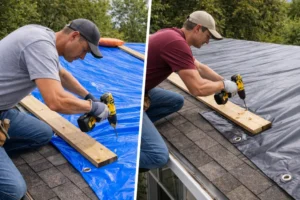
Roof tarping may look simple, but it carries real risks and consequences if done incorrectly.
DIY Roof Tarping: Risks and Limitations
DIY tarping can lead to:
- Falls and serious injuries
- Improper water drainage
- Loose fasteners that fail in storms
- Additional roof damage
These issues highlight the professional roof tarp installation safety risks homeowners often underestimate. Even a small installation mistake can reduce tarp lifespan dramatically.
Professional Roof Tarp Installation Benefits
Professional installers ensure:
- Correct tarp sizing and placement
- Secure anchoring that resists wind lift
- Proper water flow management
- Reduced risk of further roof damage
For long-term roof tarp solutions, professional installation significantly improves performance and safety.
How Long-Term Roof Tarps Are Properly Installed
Correct installation is just as important as tarp quality.
Best Practices for Long-Term Roof Tarping
- Extend the tarp well beyond the damaged area
- Anchor to structural components, not just shingles
- Use wood battens to distribute tension
- Eliminate wrinkles to prevent pooling
Following these steps helps reduce the risk of leaks and increases durability during prolonged exposure.
Maintaining a Long-Term Roof Tarp
Maintenance is critical for extended tarp performance.
A simple roof tarp maintenance checklist for homeowners should include:
- Inspecting after storms
- Tightening loose fasteners
- Clearing debris buildup
- Checking for tears or sagging
Routine inspections prevent minor issues from turning into costly failures.
Common Myths About Long-Term Roof Tarps
Myth: A Roof Tarp Is a Permanent Fix
Tarps are temporary solutions and should never replace proper roof repairs.
Myth: Any Tarp Will Work
Using the wrong material leads to faster degradation and failure.
Myth: Tarping Always Saves Money
In some cases, poor tarping increases costs. Understanding the cost comparison of emergency roof tarping vs repairs helps homeowners make smarter decisions.
Insurance Considerations for Roof Tarping
Most insurance policies require homeowners to mitigate damage after a covered event.
Understanding insurance requirements for temporary roof repairs is essential. Proper documentation including photos and receipts can support your claim and reduce disputes.
Safety Risks You Should Never Ignore
Roof tarping involves:
- Height-related fall hazards
- Slippery surfaces
- Structural instability
If conditions are unsafe, professional help is always the better option.
When a Roof Tarp Needs Replacement
Knowing the signs a roof tarp needs replacement can prevent interior damage.
Warning signs include:
- Tears or punctures
- Loose grommets
- Excessive sagging
- Water intrusion beneath the tarp
Address these issues immediately to maintain protection.
Preventing Further Damage While You Wait
One of the main goals of long-term tarping is preventing interior water damage after roof failure. A properly maintained tarp keeps moisture out and preserves ceilings, walls, insulation, and flooring until repairs are complete.
Planning for Permanent Roof Repairs
A long-term roof tarp buys time but only temporarily. Use this period to:
- Schedule inspections
- Finalize insurance settlements
- Hire qualified roofing contractors
Permanent repairs should always follow as soon as feasible.
Final Thoughts: Long-Term Roof Tarps Protect What Matters Most
A long-term roof tarp is a critical safeguard when your roof is compromised. When properly selected, professionally installed, and routinely maintained, it can protect your home for months reducing risk, stress, and repair costs.
Still, tarps are not permanent solutions. They are strategic tools designed to protect your property until full restoration is possible. Acting quickly and using the right approach ensures that temporary protection truly serves its purpose.
FAQs
What is a long-term roof tarp used for?
A long-term roof tarp protects a damaged roof from water, wind, and debris while you wait for permanent repairs or insurance approval.
How long can a roof tarp realistically stay on a roof?
Depending on the material and installation quality, a long-term roof tarp can last anywhere from a few weeks up to several months with maintenance.
Are roof tarps waterproof?
Yes, roof tarps are designed to be waterproof, but improper installation or wear can allow water to seep underneath over time.
Can a roof tarp withstand heavy rain and wind?
Heavy-duty and vinyl tarps can handle severe weather better than lightweight tarps, especially when professionally secured.
Is a roof tarp considered a permanent repair?
No, a roof tarp is strictly a temporary solution and should never replace full roof repair or replacement.
Does insurance cover roof tarping?
Many insurance policies cover emergency or temporary roof tarping as part of damage mitigation, but documentation is important.
Can I install a long-term roof tarp myself?
DIY installation is possible for small areas, but professional installation is safer and more reliable for long-term protection.
How do I know if my roof tarp needs to be replaced?
Tears, sagging, loose fasteners, or water leaking under the tarp are clear signs it needs replacement.
Will a roof tarp prevent mold growth inside the home?
A properly installed tarp helps prevent water intrusion, which significantly reduces the risk of mold growth.
What should I do while my roof is covered by a tarp?
Use the time to finalize insurance claims, schedule inspections, and plan permanent roof repairs as soon as possible.